

What changed vs GPT-5.6 Sol
Native reasoning, tools (function calling / MCP, search, computer use), and image input. One Tess key —
gpt-6-astra — not a fourth GPT-5.6 SKU.Pricing (Tess credits)
Values follow Models and Costs (credits per 100 tokens):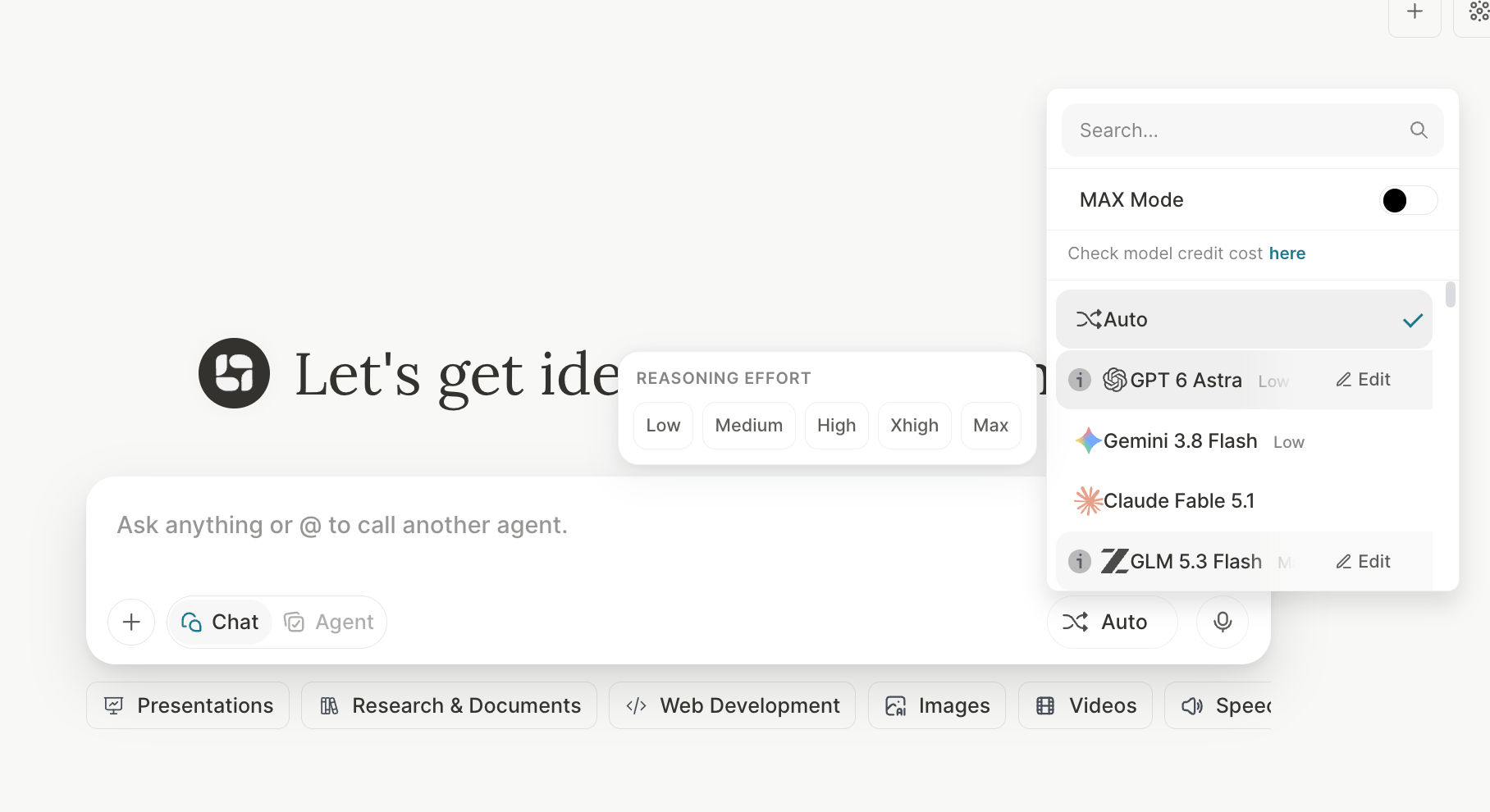
How to apply GPT-6 Astra in Tess
The gain appears when the agent gets more than a question: an objective, company context, the right tools, and a clear definition of done. Astra can then carry the work across files, systems, and decisions until it reaches the deliverable.1
Start with the final outcome
Describe what must exist at the end: an updated CRM, a memo in the company template, a finished presentation, or a code change that passes its tests.
2
Provide context and access
Attach reference files and make the required tools or connectors available. Without access to the system, the model can guide the action but cannot perform it there.
3
Set boundaries and criteria
State what it may change, when it must request confirmation, and which conditions it must verify before finishing.
4
Match effort to risk
Use medium for known workflows, high for complex analysis and execution, and xhigh/max when depth and verification justify more time and tokens.
Three playbooks to get started
1. A sales follow-up that ends in the CRM
Input: meeting transcript, account data, and qualification rules.Tools: CRM and calendar connected to the agent.
Suggested setup: medium or high effort; confirmation before sending messages or changing an opportunity.
2. A legal file set that becomes an executive decision
Input: contracts, amendments, emails, internal policy, and the memo template.Tools: company-file search and document generation.
Suggested setup: high or xhigh effort; mandatory citations and human review before legal use.
3. A software change through passing tests
Input: repository, expected behavior, project standards, and test commands.Tools: access to code, terminal, and test suite.
Suggested setup: high effort; xhigh/max for broad investigation or highly dependent changes.
Astra can only perform actions allowed by the tools, connectors, and credentials available to the agent. Keep explicit human confirmation for irreversible or high-impact operations.