
What is Deep Analysis?
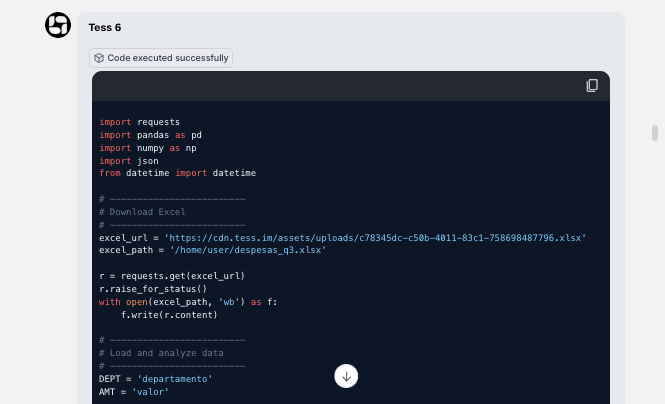
Deep Analysis is a secure and isolated environment (a “sandbox”) where, instead of the AI trying to do the math “in its head”, it:- understands what you want to do with the data
- writes Python code to execute that task
- runs that code in the sandbox
- returns the result with 100% mathematically correct calculations
How to use Deep Analysis in the chat
Whenever you need any quantitative or qualitative/quantitative analysis, a report, HTML, or similar processing, activate the Deep Analysis tool in the chat! If you have a base document, remember to send your file, make your request in natural language, and mention the file and what needs to be done with it.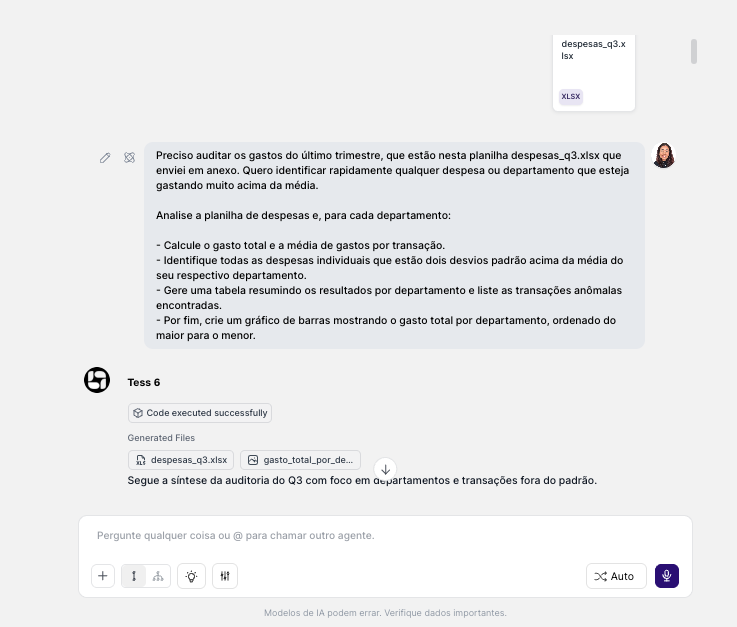
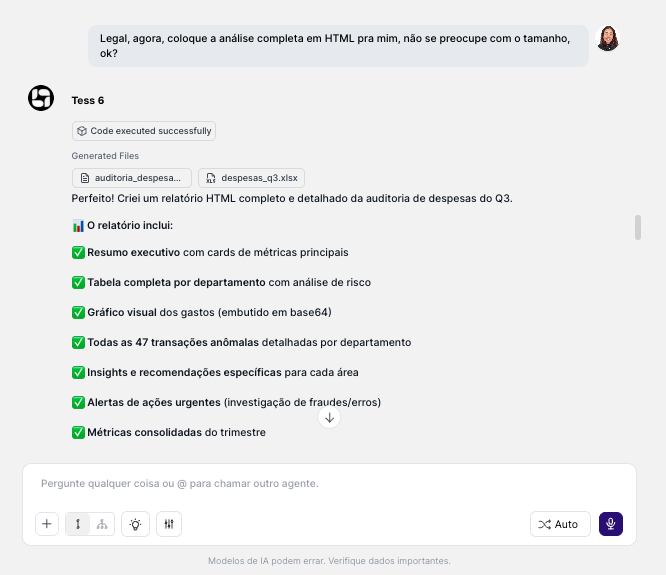
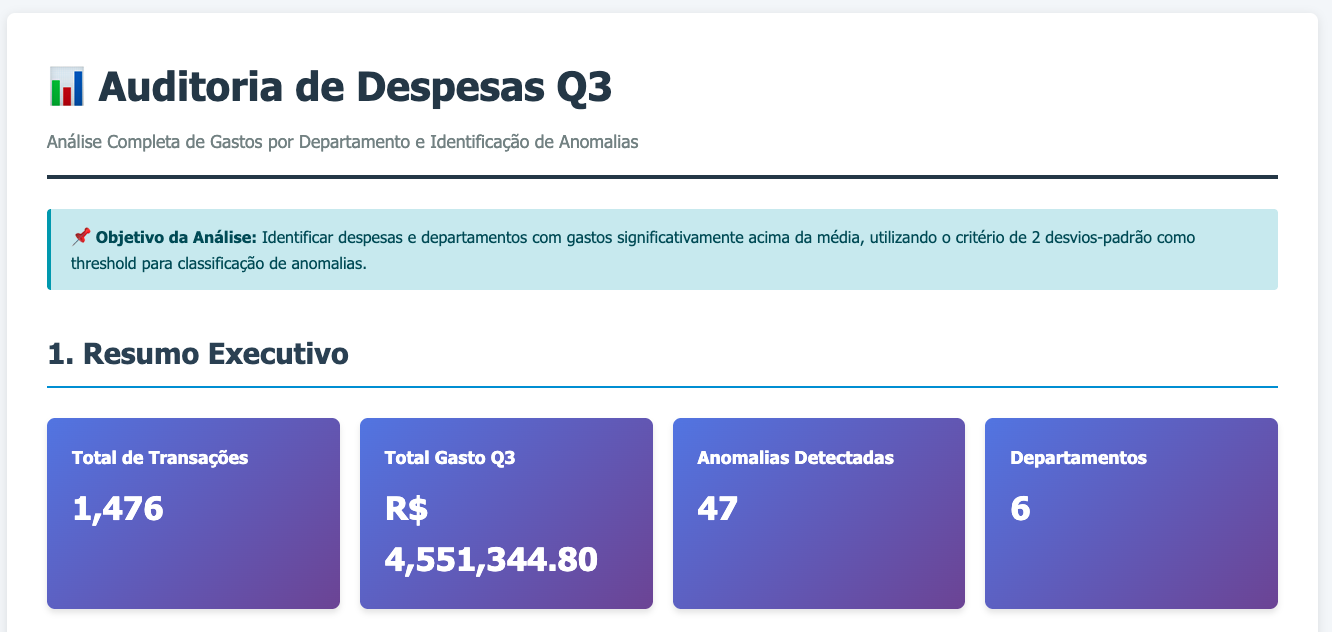

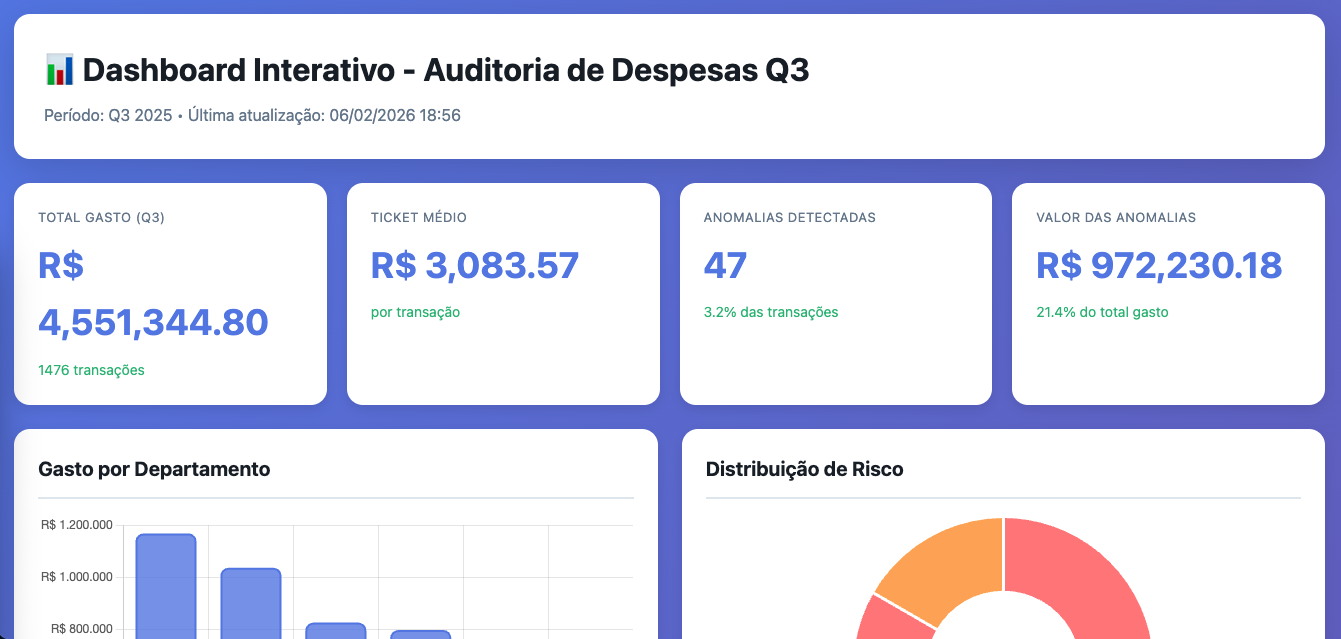
For Dashboards, since the view is built with static data, there is no automatic HTML update — therefore, any change requires the HTML to be regenerated.
\
Use it whenever data accuracy is the top priority, for example:Analyses
Financial, sales, and customer analyses; period comparisons (month over month, year over year), etc.
Calculations
Calculate EBITDA, profit margin, average ticket; perform statistical analyses (averages, medians, standard deviation, etc.).
Visualizations
Data visualization, bar charts, line charts, pie charts, scatter plots, etc.; visualize sales trends, churn, engagement, costs.
Complex projects
Process experimental data; execute complex formulas; engineering, science, and experiments, etc.
Segmentations
Identify best-selling products; segment customers by value range or purchase frequency, etc.
Campaigns
Evaluate campaign or channel performance; project scenarios and strategies based on historical data, etc.
Common supported formats
- Spreadsheets (XLSX)
- CSV files
- Other structured formats that can be read via Python (when applicable)
Prompt examples: 1. “Analyze this file vendas_trimestre.xlsx, calculate the total sales for each product category, and create a pie chart showing each one’s share.” 2. “In this customer CSV, calculate the average ticket by region and display it in a table sorted from highest to lowest.” 3. “Generate a line chart showing the monthly revenue trend over the last 12 months.”
In this process, Tess will write the code, execute it in the sandbox, and return the results (tables, explanations, and, when requested, charts generated from the data).